ORB Trading Lessons

Retrospective notes on trading a single opening range setup, written after the fact. What the first year teaches, the understanding that only follows a painful loss, and widely repeated advice that did not hold up.

Written Looking Backwards

These notes were not written by someone starting out. They are what remains after a long stretch of trading one setup, and most of them were paid for rather than reasoned out in advance. That distinction matters, because the things that turn out to be important are rarely the things that seemed important at the beginning, and the order in which they become obvious is not the order in which anyone would choose to teach them. Retrospect is the only vantage point from which any of this is visible.

The First Year Is Mostly About Yourself

The expectation going in is that the work will be analytical: finding the right parameters, the right instrument, the right filter. Some of that is real. Far more of the first year turns out to be discovering how you behave when a rule you wrote becomes inconvenient, what a run of losses does to your willingness to follow it, and how quickly a plan dissolves when the market does something you had not pictured. None of that arrives from reading. It arrives from sitting through it.

Some Lessons Have an Entry Price

There is a category of understanding that cannot be transmitted. Everyone hears that position size matters, and almost everyone genuinely believes it, and then a single oversized loss teaches it in a way the sentence never did. The frustrating part is that the lesson was available the whole time and being told it clearly changed nothing. That gap between knowing something and having learned it is the most reliable feature of the whole experience.

Plenty of Standard Advice Is Wrong

Not deliberately wrong, mostly. It is advice that was true in a particular context, got repeated without the context, and hardened into a rule that new traders apply everywhere. Some of it is harmless. Some of it costs money for years before anyone questions it, and questioning it is difficult precisely because it is so widely repeated that disagreeing feels like a beginner's mistake rather than an observation.

Looking Back Honestly

The articles here are retrospective rather than instructional: what a first year of trading this setup actually teaches, the specific understanding that seems to arrive only after a loss large enough to hurt, and the commonly repeated guidance that turned out on inspection to be unhelpful. Mechanics, entry rules and range measurement are dealt with properly elsewhere. This is about what the experience left behind.

Latest Guides

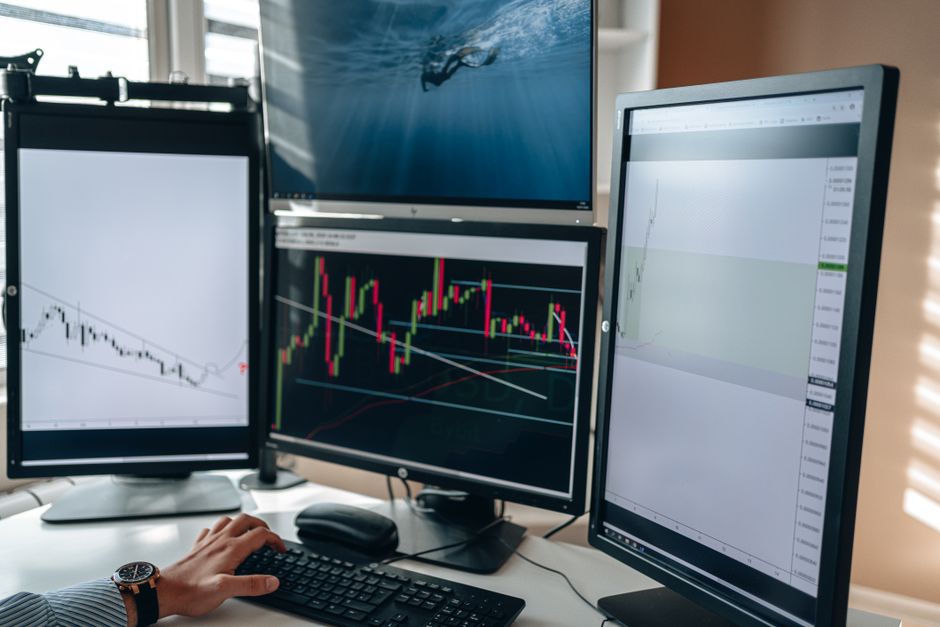
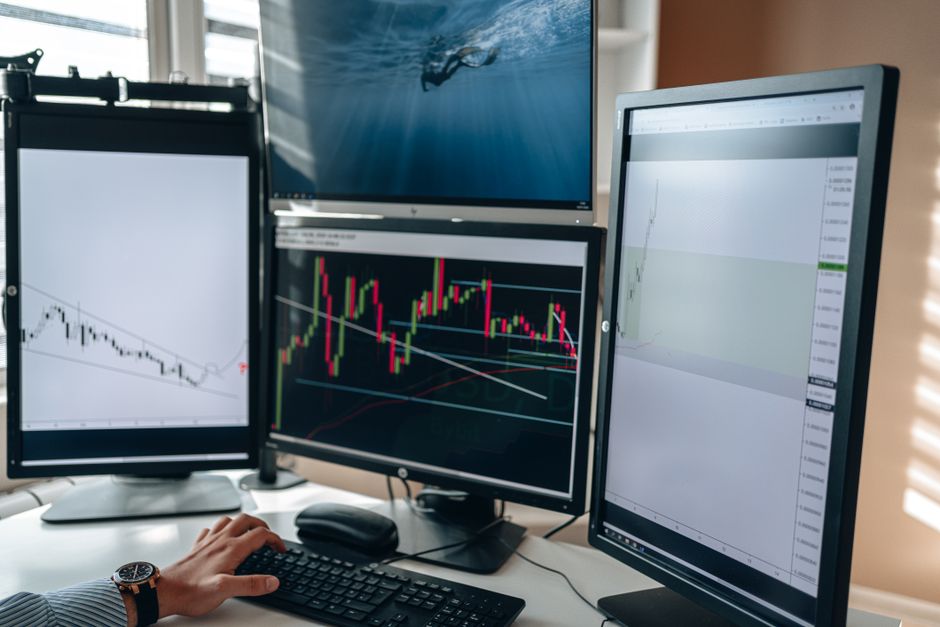
A multi-monitor stock trading setup showcasing charts and data analysis in a home office setting.

Common Advice That Turned Out to Be Wrong

2026-09-03

Most bad advice in this area is not fabricated. It is a true observation that lost its context somewhere along the way, got repeated by people who had not tested it, and became something a beginner is expected to accept. What follows are four examples that took an embarrassingly long time to question, held on to mostly because disagreeing with something so widely stated felt like arrogance rather than observation.

Trade Every Signal Because You Cannot Know Which Ones Work
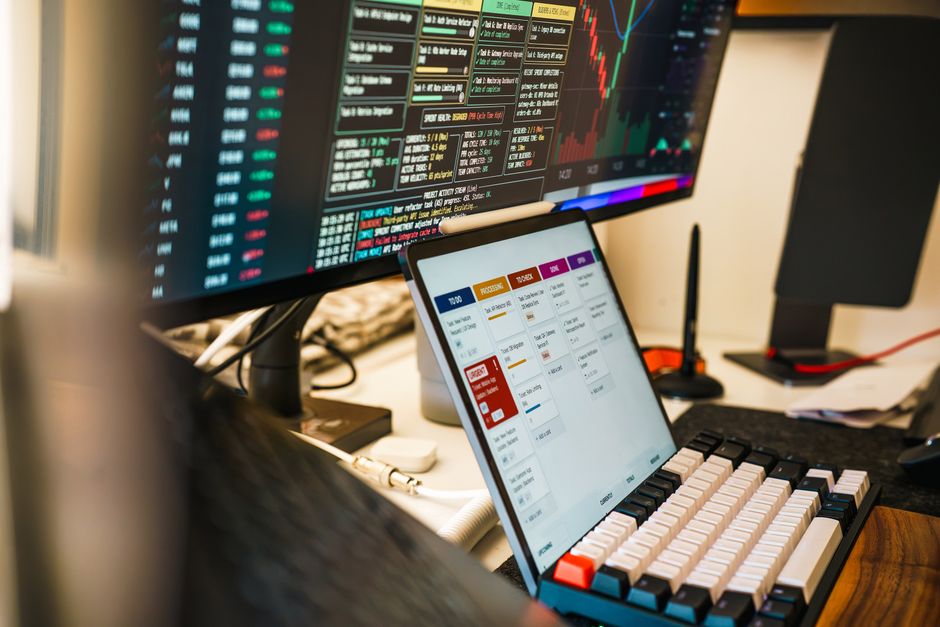
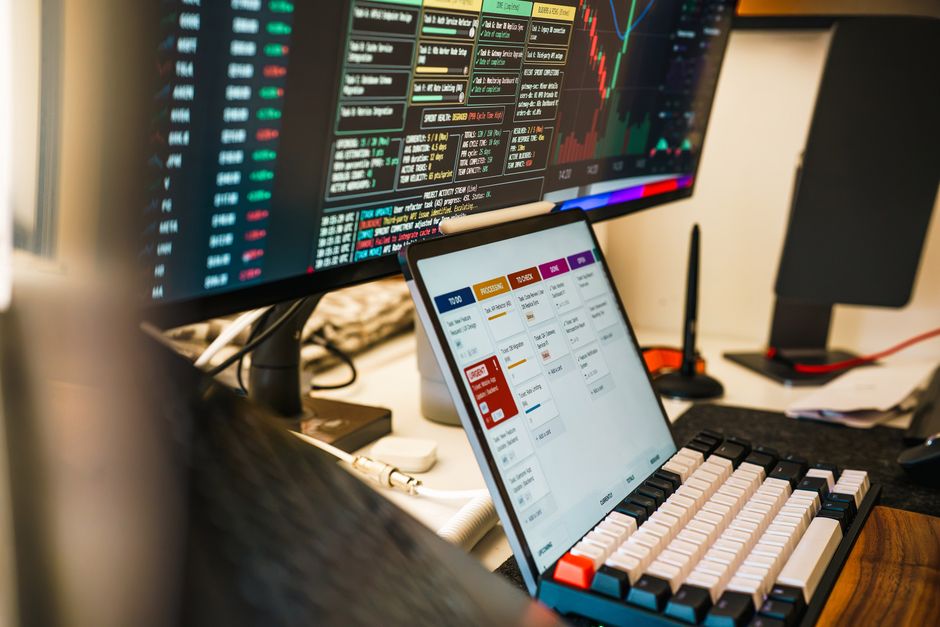
A sleek, modern workspace featuring trading monitors and a tablet for project management.

This is presented as discipline and it sounds unarguable. If you cannot tell in advance which setups will succeed, filtering is just an invitation to cherry pick, and cherry picking destroys any edge the rules had.

The flaw is in the premise. You genuinely cannot judge whether an individual break will hold, but you can absolutely judge whether the conditions around it are the conditions the rules were designed for. A range far outside its normal height, or a session where a major release lands moments after the window closes, is not an unknowable coin flip. It is a known bad case. Treating measurable conditions as unknowable because individual outcomes are unknowable conflates two different things, and the cost of that confusion is a long run of trades taken in circumstances that never suited the approach.

Move the Stop to Break Even as Soon as You Can

A businessperson using dual monitors to analyze stock market trends with charts and graphs.

The appeal is emotional and it is understandable. A trade that cannot lose is a comfortable trade, and the phrase free trade does a lot of work in making this sound like risk management.

In practice it converts a decent number of eventual winners into scratches, because normal movement after a break routinely revisits the entry before continuing. The stop was placed where it was for a reason having to do with the structure of the range, and moving it to a price with no structural meaning at all, chosen purely because it is where you happened to get in, replaces a considered level with an arbitrary one. It reduces anxiety and it reduces results, and the first of those is why it survives.

Backtest Until You Are Confident

Testing is worth doing and the advice is not wrong so much as incomplete. What goes unsaid is that confidence is not the output being sought, and that a long enough search through parameter combinations will always produce something that looks excellent on the data it was fitted to.

The more serious problem is that the test cannot include the part that actually fails. A record of what the rules would have done contains none of the hesitation, none of the skipped mornings, none of the sessions where you would have overridden the entry. Confidence built on that record is confidence in a version of yourself who does not exist, and the first divergence between the two is where the trouble starts.

Find the Instrument That Suits the Strategy

This one sounds sensible and consumed a great deal of time. The search for an instrument whose ranges behave more cleanly is genuinely endless, because there are always more instruments and any of them will look promising over a short enough window.

What was missed is that switching resets everything you had learned. Knowing what a normal range looks like on one instrument takes months of watching, and that knowledge does not transfer. Someone who has watched a single instrument for a year has a sense of when today is unusual that no amount of scanning across many can supply. The instrument mattered less than the familiarity, and the search for a better one was mostly a way of avoiding the slower work.

Why This Advice Persists

Each of these is memorable, easy to state, and comforting in a specific way. They sound like discipline while asking for very little, and none of them can be disproved by any individual session, so the person repeating them is never confronted with being wrong. The only correction available is your own record, kept long enough and honestly enough that it can disagree with something everybody says.


Read more →

Modern office desk with laptop displaying financial graphs, tablet, and open notebook.

The Lesson That Only Arrives After a Large Loss

2026-09-03

The advice about position size is everywhere and it is not complicated. Risk a small fraction, keep any single outcome unimportant, survive to keep trading. Anyone can repeat it after a week of reading, and most people believe it sincerely while continuing to size positions in a way that contradicts it. The belief and the behaviour sit side by side without apparent friction until a loss arrives that is large enough to make the contradiction impossible to ignore.

Why the Sentence Does Not Work

A modern workspace featuring financial charts and multiple clocks on a white table, ideal for trading.

Advice about risk is a claim about a future feeling, and future feelings are the thing people are worst at estimating. Asked in advance how a large loss would feel, the honest answer is a guess assembled from smaller losses, and it is a guess that is reliably too mild. The difference is not one of degree. The experience contains elements that the smaller version simply does not have.

So the instruction is received as information when it needed to be received as a warning about something you have not experienced. Nothing about the wording can fix that, which is why the advice is simultaneously correct, universally available, and largely ineffective.

What the Loss Actually Demonstrates

Modern workspace showcasing financial analysis with digital charts and reports.

The most striking part is not the money. It is watching your own judgement stop functioning in real time. The position is beyond the point where it should have been closed, the plan says one thing, and something else entirely is deciding what happens next. You observe yourself hoping, which is a strange experience to have while holding a position, and you notice that the reasoning you are producing is being generated to justify inaction rather than to guide it.

That is the transferable part, and it is a fact about you rather than about markets. Every rule written afterwards is written by someone who has seen their own decision making fail under load and no longer believes it will hold next time. This is a much more solid foundation for a risk rule than any amount of agreement with the principle in the abstract.

What Changes Afterwards

Position size changes, obviously, and usually by more than the arithmetic requires. But the more durable changes are structural. Stops get placed as orders at entry rather than held as intentions. Maximum session loss becomes a number written down before the session rather than a vague sense of when to stop.

The common thread is a shift away from relying on in-the-moment judgement toward arrangements that work without it. Someone who has watched their judgement fail once does not trust it in the same conditions again, and the resulting design is more robust for exactly that reason.

The Part That Is Not a Lesson

It is worth separating the understanding from the damage. A large loss teaches something, but it also teaches things that are simply wrong: that the setup is broken, that the market is against you, that the size you were using before was reckless when it may have been reasonable. Fear generalises badly, and the period after a bad loss is when people abandon approaches that were working.

Waiting before making structural changes is usually right. The lesson about your own behaviour under pressure is real and will still be real in a month. The conclusions about the strategy drawn in the same week are contaminated by one outcome and mostly should not survive.

It Cannot Be Skipped, Only Made Cheaper

There is no version of this where reading enough substitutes for the experience. What can be controlled is the price. The same understanding arrives from a loss that is painful at a small size as from one that is painful at a large size, because what makes it land is the feeling rather than the amount, and the feeling scales with what the loss means to you rather than with the number itself.

That is the only genuinely useful thing to tell someone starting out, and it will not be believed either. It is still worth saying, because the ones who half believe it will size a little smaller, and a little smaller is the difference between an expensive education and one that ends the education entirely.

Read more →

Businessman reviewing financial charts on multiple monitors in an office setting.

What the First Year Actually Teaches

2026-09-03

Looking back at the first twelve months, almost none of the effort went where it should have. The time was spent on parameters, instrument selection and chart configuration, and the things that actually determined the outcome were sitting elsewhere the entire time, unexamined because they did not look like the sort of thing a person works on.

The Rules Were Never the Hard Part

A multi-monitor stock trading setup showcasing charts and data analysis in a home office setting.

Writing a workable set of conditions takes an afternoon. Understanding why each one exists takes a little longer. Neither is difficult, and the early feeling of having done something substantial by producing a documented strategy is misleading, because the document was the easy artefact.

What consumed the year was the distance between the document and behaviour. Following the rules on an ordinary session is trivial. Following them on the fourth losing session in a row, or on the morning a setup appears that is technically valid and looks obviously wrong, is a completely different task and one the document does not help with at all.

Sample Size Is Larger Than It Feels

A sleek, modern workspace featuring trading monitors and a tablet for project management.

Early on, ten sessions felt like evidence. A run of good results suggested the approach worked and a run of bad ones suggested it needed changing, and both conclusions were drawn with total confidence from almost nothing.

The correction is slow and mostly unwelcome. Anything short enough to be emotionally significant is too short to be informative, and anything long enough to be informative is long enough that you will have wanted to change something halfway through. Most of the first year's adjustments were responses to noise, and the version of the strategy at the end of it was not better than the version at the start, just more elaborate.

Recording Everything Was the Best Decision

Keeping a record of every session, including the ones with no trade and the reason for skipping them, felt like busywork for the first two months. It became the single most useful thing available, because it was the only source of information about the past that was not filtered through memory.

Memory of trading is unreliable in a specific direction. It keeps the dramatic sessions and discards the ordinary ones, so the remembered version of any stretch is more volatile and more eventful than the recorded version. Reading back a month of notes is routinely surprising, and it is surprising in the same way every time.

Boredom Was the Real Adversary

Nobody warns you adequately about this. The strategy asks for a decision in a narrow window and then asks for nothing, and the amount of time that leaves is substantial. Losses were unpleasant but they were at least events. Sessions where the correct action was to do nothing, repeated across a quiet fortnight, were harder to sit through and produced far more rule breaking.

Every unplanned trade in the record traces back to either a loss or an empty stretch, and the empty stretches account for more of them. That was not the ratio anyone would have predicted at the start.

What I Would Change

Less time on the parameters and more on infrastructure around the decision: a fixed routine, a written record, a defined thing to do once the window closes. Fewer changes to the strategy and a rule about when changes are permitted at all, because the changes made mid stretch were almost all reactions to a recent outcome rather than to anything learned.

And a smaller starting size, not for the arithmetic but because the size determined how much of the emotional content of the first year there was to manage. A position small enough that a loss was genuinely unimportant would have made every other lesson cheaper to learn, and the lessons were going to arrive regardless of what they cost.

Read more →